Framework
The Law of Water
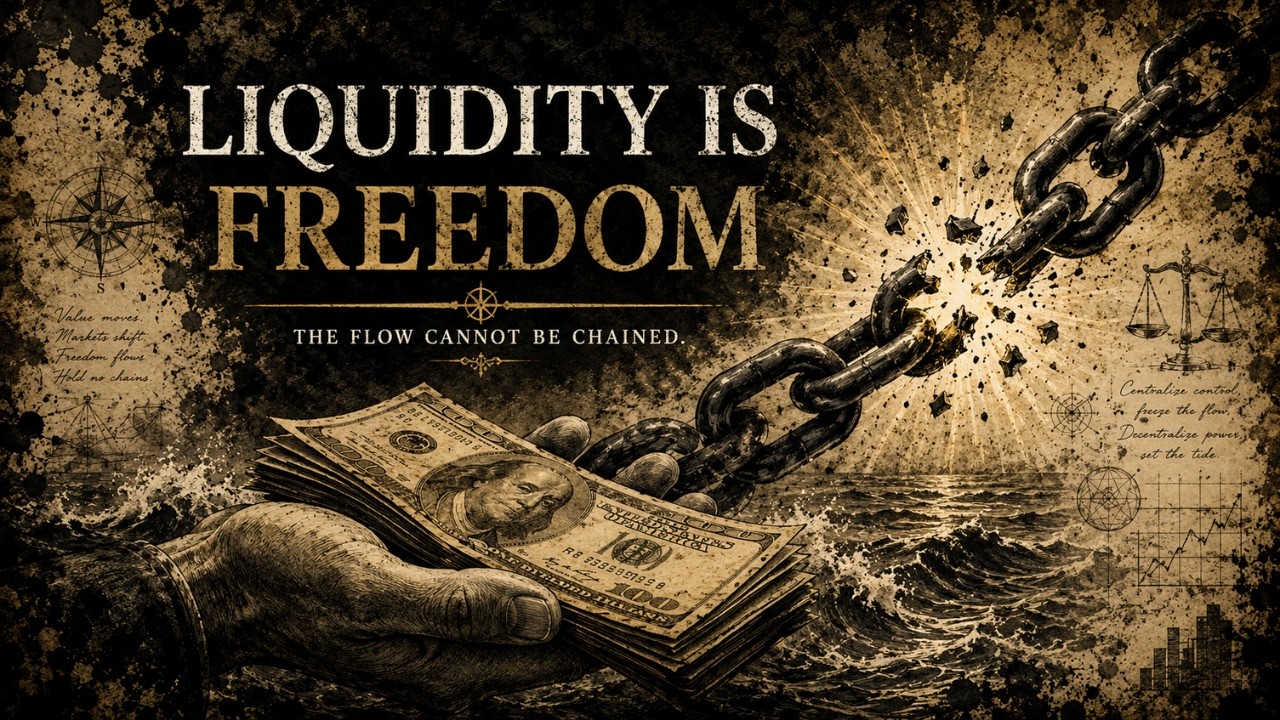
Water does not argue. It does not negotiate. It does not need permission. It moves. It finds the lowest resistance, the smallest crack, the forgotten edge. When blocked, it pools. When constrained, it pressures. When ignored, it floods. And when given space, it sustains everything it touches. Money behaves the same way. For most of human history, value moved freely through trade, trust, and shared survival. Flow created legitimacy, not authority. Then came the dams: borders, banks, ledgers, titles, permissions, intermediaries. Structures built not to help water move, but to decide who controls the valve. This framework examines how every system that prioritizes control over circulation eventually poisons itself. The signs are always the same: stagnation, inequality, pressure buildup, and sudden collapse that no one claims responsibility for. This is not ideology. It is physics.
Watch the Chapter
Watch the complete visual presentation of this framework with narration and illustrations.
Read the Framework
Read the complete framework directly inside the Web3Exclusive archive in a distraction-free reading experience.
Read in the ArchiveArchive Copy
Download the printable PDF version for offline reading, study, or personal reference.
Core Principles
Related Frameworks
Related Essays
Friction and Flow
Every system exists in tension between friction and flow. The art is knowing which to embrace.
The Illusion of Central Control
Every attempt to control a system perfectly produces the conditions for its circumvention.
On Patience as Strategy
The most effective systems do not rush. They understand that time itself is a force—and they use it.